
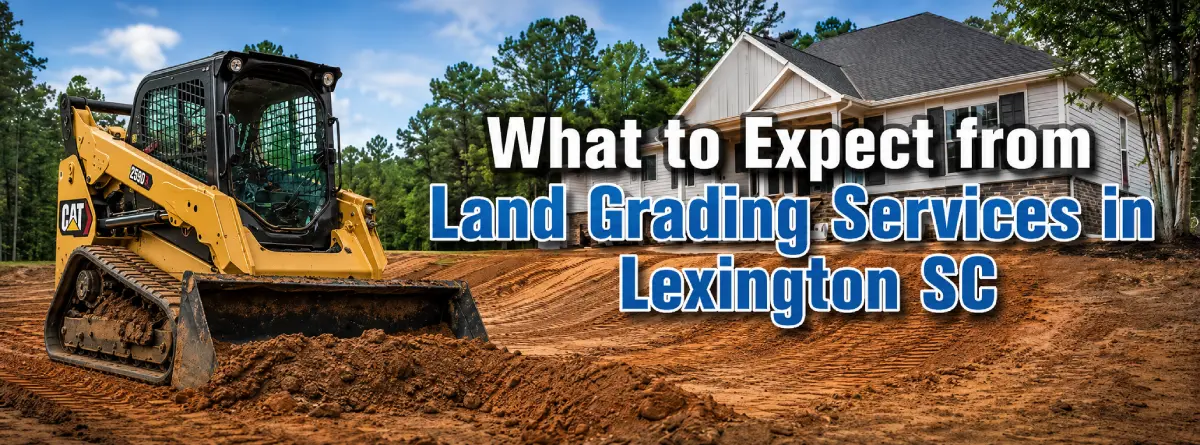
What to Expect from Land Grading in Lexington SC
Quick Answer: Land grading in Lexington, SC, reshapes the ground to create a more useful and stable surface while directing runoff away from structures and problem areas. The right grading plan depends on the existing slope, soil, drainage path, access, and how the property will be used afterward.
Grading is more than making dirt look smooth. On properties around Lexington, Columbia, Irmo, and Lake Murray, it often connects directly to standing water, washed-out areas, uneven lawns, driveway preparation, and construction planning. A contractor providing land grading in Lexington SC should first understand where water currently travels and what the finished area needs to support.
The Process Starts with a Site Evaluation
Before equipment starts moving soil, the property should be reviewed for high and low areas, runoff direction, soft ground, erosion, utilities, nearby structures, and equipment access. The contractor also needs to know whether the goal is a smoother yard, a building pad, driveway preparation, drainage correction, or cleanup after clearing. Property lines, easements, HOA requirements, and local rules may also need to be checked before substantial soil disturbance begins.
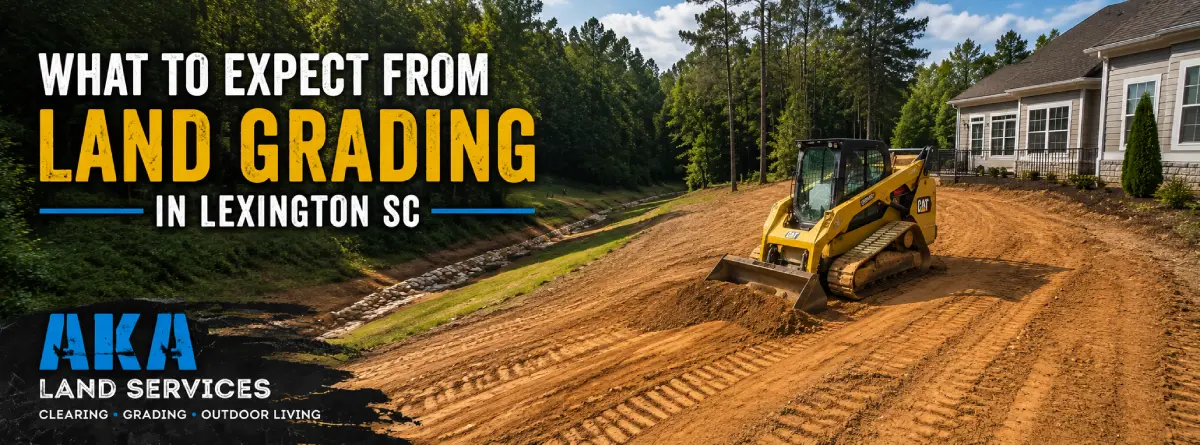
Grading Must Work with the Drainage Plan
A surface can look level and still hold water. Effective grading usually creates controlled pitch so rainfall moves toward an appropriate outlet instead of collecting beside a foundation, crossing a driveway, or cutting channels through exposed soil. Some properties need grading alone, while others may also need swales, downspout redirection, catch basins, or other yard drainage solutions designed around the site.
Soil Movement, Compaction, and Final Preparation
The amount of soil that must be cut, moved, added, or removed varies widely. Fill placed in a low area may need to be installed and compacted in stages, especially when the surface will support a driveway, patio, or future structure. After the rough grade is established, the area can be fine-graded for topsoil, seed, sod, gravel, landscaping, or the next phase of construction.

Why This Matters
Good grading gives water a predictable path and creates a firmer foundation for whatever follows. It can help reduce recurring puddles, erosion, muddy traffic areas, and premature lawn or hardscape damage. It also makes later work easier because drainage, elevation, and access have been considered before materials are installed.
Common Mistakes
- Flattening the property without preserving enough slope for runoff.
- Adding fill over soft or organic soil without proper preparation or compaction.
- Sending water toward a neighbor, roadway, septic area, or building foundation.
- Starting landscaping or hardscaping before the final drainage pattern is confirmed.
Best Practices
- Identify the property goal and intended finished use before grading begins.
- Review drainage outlets, downspouts, utilities, access, and erosion risks together.
- Protect disturbed soil with seed, sod, mulch, stone, or another suitable surface promptly.
- Inspect the area after a heavy rain and correct small drainage issues before later improvements are added.
Local Relevance
Lexington County properties often combine dense clay soil, wooded edges, uneven terrain, and short periods of heavy rain. Clay can drain slowly when compacted, yet exposed slopes can wash quickly when vegetation is removed. A grading plan for a subdivision lot near Columbia may look very different from one for rural acreage in Pelion, Leesville, or Batesburg, so the work should be based on actual site conditions rather than a standard approach.
When to Contact a Professional
Expert assessment is useful when water stands for days, soil is washing toward a structure, a driveway repeatedly ruts, a cleared lot needs shaping, or a future patio, lawn, fence, or building area needs a stable base. Reviewing recent land service projects can also help property owners understand the difference between rough grading, drainage correction, and finished site preparation.
Final Thoughts
Land grading should solve a defined property problem, not simply move soil from one place to another. AKA Land Services evaluates slope, runoff, access, soil conditions, and future use before recommending an approach. Property owners who need help planning grading work can request a project estimate for an on-site discussion.
Frequently Asked Questions
Can land grading fix standing water in my yard?
Land grading can help when standing water is caused by low areas or poor surface slope. Some properties also need a swale, drain, downspout correction, or suitable runoff outlet.
How much slope does a graded yard need?
The required slope depends on the soil, structures, runoff volume, outlet location, and planned use of the property. The goal is controlled drainage without creating erosion or sending water toward another problem area.
Do I need a permit for land grading in Lexington, SC?
Permit and review requirements vary according to the location, amount of disturbed soil, floodplain status, stormwater concerns, project size, and connection to construction. Property owners should check with the appropriate city, county, HOA, or permitting office before major grading begins.
What should happen after land grading is completed?
Disturbed soil should normally be stabilized with seed, sod, mulch, stone, landscaping, or another suitable surface. The property should also be inspected after rainfall to confirm that runoff follows the intended path.
How long does a residential grading project take?
The schedule depends on the size of the area, access, soil conditions, weather, amount of soil movement, drainage work, and finished surface. An on-site evaluation is usually needed before providing a dependable project schedule.